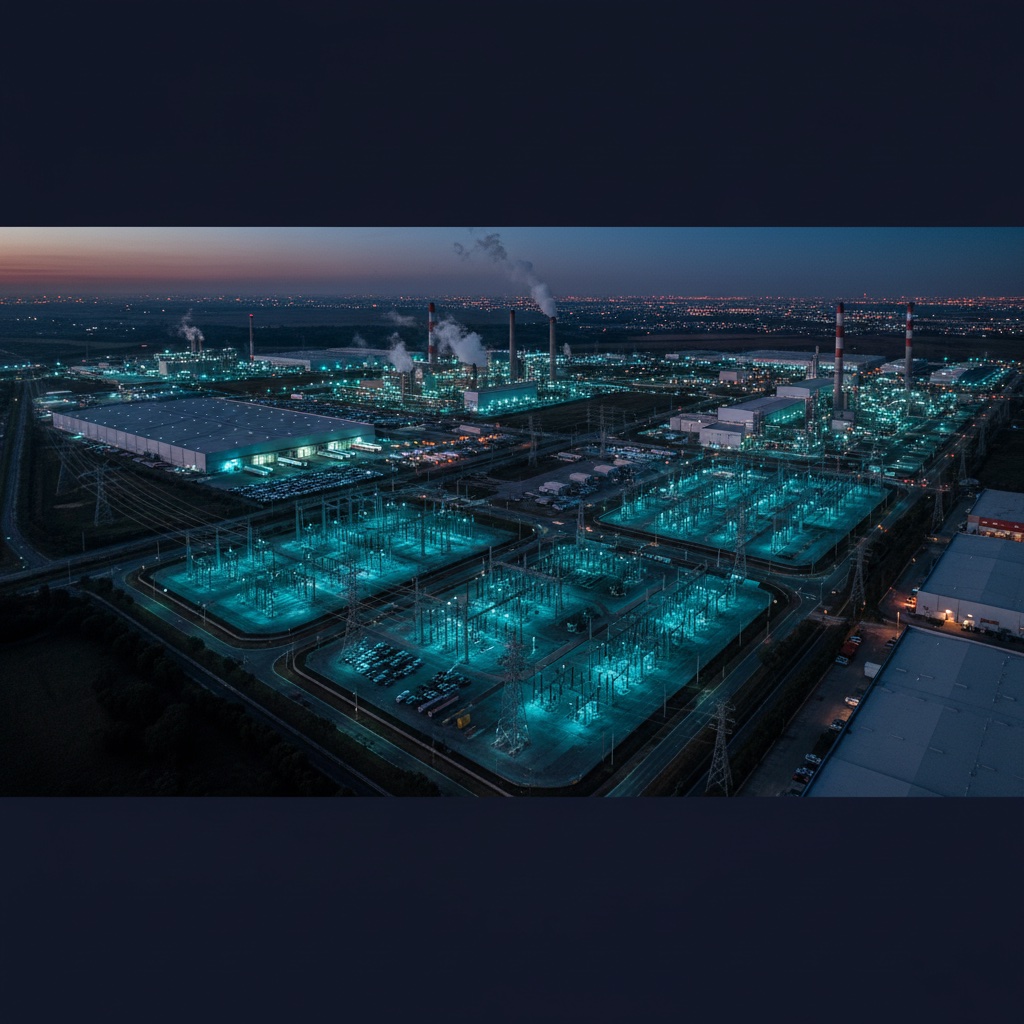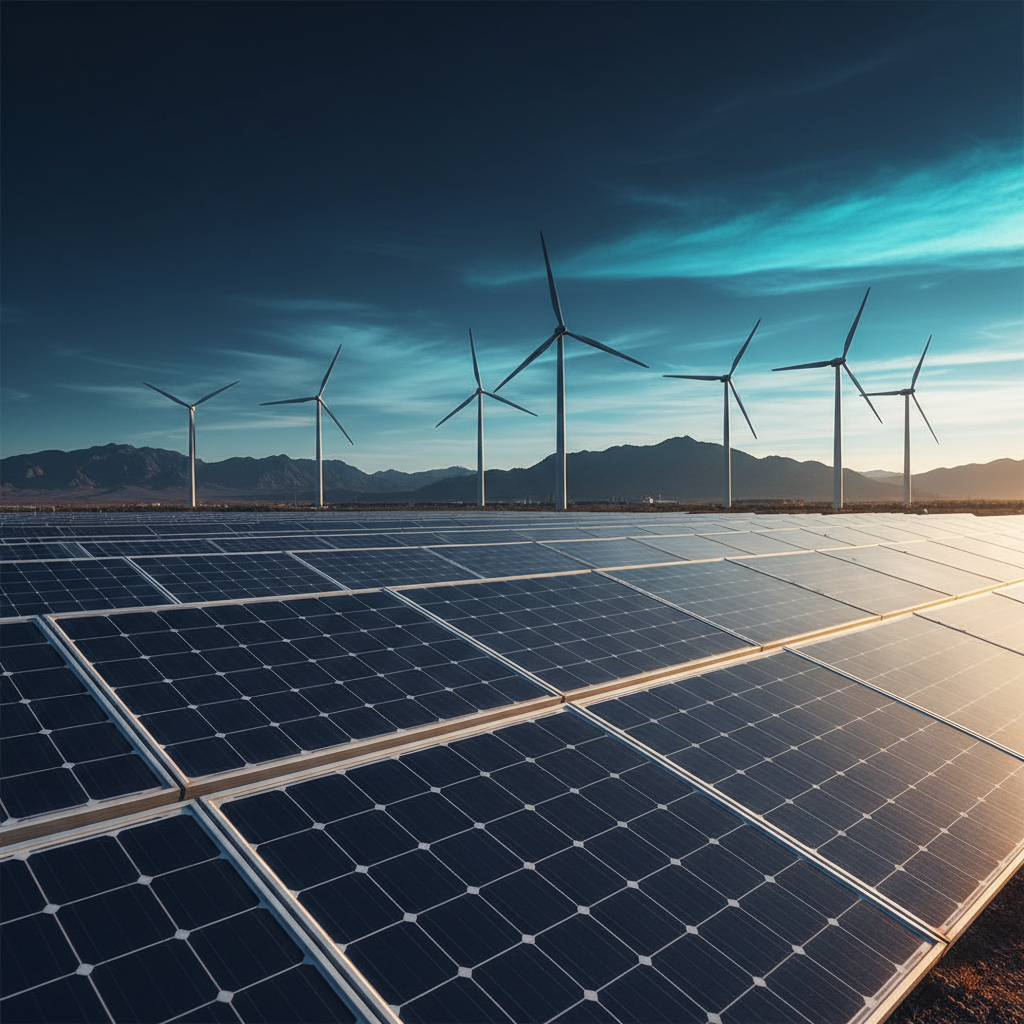
When a global corporation asks its Mexican subsidiary to "secure 50% certified renewable energy," the immediate response from many plants is to buy solar panels. It's the tangible answer: equipment on the roof, photo for the ESG report, sustainability narrative. The problem is that this response —executed without integrated strategy— frequently costs more, certifies less, and locks in contractual decisions that limit real savings.
Clean Energy Certificates (CELs) are the financial instrument Mexico designed precisely to solve that problem: separate green attribution from physical energy consumed. Used well, they let an industry report verifiable clean consumption at predictable cost. Used poorly, they become a ritual purchase with no real value for either reporting or operations. This article explains what they are, how they trade, and how to integrate them into an industrial strategy without falling into the trap of buying without context.
What CELs are
A Clean Energy Certificate (CEL) is a tradable instrument that accredits the generation of one megawatt-hour (MWh) of certified clean energy produced by a plant registered under the regime established by the Electric Industry Law (LIE).
Its logic is elegant: it physically separates two things that coexist in the electricity system:
- The physical kWh that travels through the grid and lights up a motor or a furnace (it has no "color": once on the grid, electrons mix).
- The green attribution —the right to claim that kWh is "clean"— documented in the CEL and accounted for separately.
This separation lets an industrial consumer buy physical energy at a competitive price in the Wholesale Electricity Market (MEM), and at the same time secure renewable attribution through CELs acquired in the parallel certificate market. It's the logic by which mature green markets in the world operate (Renewable Energy Certificates (RECs) in the US, Guarantees of Origin in Europe).
The Mexican regulatory base is in the LIE, the Energy Regulatory Commission (CRE) guidelines, and the National Energy Control Center (CENACE) manuals.
Who issues them and who buys them
CELs have a well-defined market with three roles:
Who issues them
Certified clean-energy generators: wind farms, photovoltaic solar plants, geothermal stations, hydro, efficient cogeneration, certain biomass plants. The "clean" certification is granted by CRE under specific criteria. Each MWh actually generated and delivered to the system produces one CEL the plant can sell to the market.
Who is required to buy them
The LIE established a gradual clean-coverage obligation. The following parties must present CELs to CRE for their consumption:
- Basic Service Suppliers (CFE)
- Qualified Suppliers (private firms serving Qualified Users)
- Users with consumption equal to or above a relevant threshold in the MEM
- Qualified Supply users in general for the applicable fraction
The required percentage is updated periodically and increases progressively. The regulatory intent is to transition the Mexican mix toward cleaner generation without imposing a rigid physical mandate.
Who buys them voluntarily
Companies with ESG commitments —Net Zero targets, RE100, Scope 2 reporting under CDP or SBTi— buy CELs above their legal obligation to voluntarily accredit clean consumption in their total energy mix.
The price of the CEL: how it forms
The CEL price forms by supply and demand in a market parallel to the physical-energy one. Three factors drive it:
- Supply of certified clean generation. More installed renewable capacity = more available CELs = downward pressure.
- Demand mandated by regulatory percentages. When the required percentage rises, institutional demand rises and pushes the price up.
- Voluntary ESG demand. Global corporate pressure for verifiable reports has grown steadily and adds a non-regulatory demand layer.
Historically, the Mexican CEL has had prices significantly lower than its European or US equivalents, which has made Mexico an efficient market to accredit clean attribution at low cost —with the caveat that the price trajectory depends on future regulatory behavior—.
CELs trade in the CEL Management System administered by CENACE, with periodic settlements.
For an industrial company: 3 ways to leverage them
A Mexican industrial operation has three concrete routes to integrate CELs:
Route 1 — Renewable self-supply + own CELs
If the company installs distributed clean generation (rooftop solar PV, behind-the-meter generation) and registers it as a certified clean plant, each MWh generated produces an own CEL the company can use to accredit its clean consumption and, if exceeding its obligation, sell to the market.
This route is attractive when the technical and economic viability of self-supply already exists on its own. It is not a good reason by itself to install panels if the plant has no independent technical case.
Route 2 — Contract with renewable component
The Qualified Supplier can structure a contract that includes a percentage component of certified renewable energy, where the corresponding CELs transfer automatically to the client. It's the most common route for companies wanting renewable accreditation without investing in generation assets.
The advantage is operational simplicity. The effective price of the "green" kWh in this scheme typically includes a small premium over the conventional kWh, but predictable and manageable.
Route 3 — Direct CEL purchase in the market
For companies with a comfortable electricity contract that just need to accredit green attribution, direct purchase of standalone CELs is the most flexible route. The required CELs are bought without touching the physical-energy contract.
This route is typical for companies with ESG reports needing to cover a specific Scope 2 percentage without renegotiating the entire supply.
CELs for ESG / Scope 2 reporting: why they are valid in Mexico
International ESG frameworks (GHG Protocol, CDP, SBTi, RE100) recognize Mexican CELs as a valid instrument to claim clean consumption under the market-based method of Scope 2, provided they meet quality principles: traceability to the generator, exclusivity of attribution, geographic congruence with the electricity market where energy is consumed, and documentary verification.
This means a Mexican industrial plant with properly documented CELs can report clean consumption to its global parent or third-party verifiers with the same legitimacy as a European site with Guarantees of Origin. The condition is documentation quality and process rigor. That is exactly how the subsidiary in our pharma energy consulting case met an SBTi commitment using CELs transferred by its supplier without touching its validated operation.
The mistake of buying CELs without integrated strategy
Four recurring mistakes we see:
- Buying CELs before optimizing consumption. Paying green attribution on consumption inflated by inefficiencies subsidizes the inefficiency. First reduce consumption, then attribute what remains.
- Buying CELs without aligning with corporate reporting. If the global parent uses SBTi but the local team buys CELs without verifying eligibility under specific SBTi criteria, the CELs don't count toward the consolidated target.
- Mixing own and purchased CELs without clear traceability. External auditors may question attribution if documentation is ambiguous.
- Assuming CELs equal "zero carbon". CELs cover Scope 2; Scope 1 emissions (direct combustion) and Scope 3 (value chain) require separate strategies.
Mexican CEL market trends
Three relevant trends in the last 24 months:
- Growing voluntary demand from global ESG pressure, especially in automotive, electronics, food and beverage, and pharma.
- Higher scrutiny on traceability from international verifiers.
- Regulatory volatility on the required percentage and calculation methodology. Serious companies structure their CEL positions with safety margin over the minimum obligation.
To understand the market context where CELs operate, review Mexico's MEM Explained for Non-Experts. To understand the consultant's role in structuring an integrated strategy, review our pillar guide When and Why Your Industry Needs Energy Consulting.
Next step
If your company is under ESG pressure and the CEL decision is being made in isolation from the electricity contract, there is a high probability you are overpaying or under-crediting. An integrated review of consumption, contract, and CEL obligation lets you structure the position correctly.
For a specific evaluation of CELs in your energy mix, request a free evaluation or learn the scope of our sustainable services.
Frequently asked questions
A Clean Energy Certificate (CEL) is a tradable instrument that accredits the generation of one megawatt-hour (MWh) of certified clean energy, produced by a plant registered under the Electric Industry Law. It separates the physical kWh that travels through the grid from the green attribution, which is documented and accounted for separately. This lets an industry buy competitive physical energy in the MEM and secure renewable attribution through CELs in the parallel market.
The Electric Industry Law established a gradual clean-coverage obligation. The parties required to present CELs to the CRE are Basic Service Suppliers (CFE), Qualified Suppliers, users with consumption equal to or above a relevant threshold in the MEM, and Qualified Supply users for the applicable fraction. The required percentage is updated periodically and increases progressively.
There are three routes. Renewable self-supply with your own CELs, when distributed generation already has an independent technical case. A contract with a renewable component, where the Qualified Supplier transfers the CELs to the client; this is the most common route and the simplest operationally. And direct purchase of standalone CELs in the market, the most flexible for those who already have a comfortable electricity contract and only need to accredit green attribution.
Yes. International frameworks (GHG Protocol, CDP, SBTi, RE100) recognize Mexican CELs as a valid instrument to claim clean consumption under the market-based method of Scope 2, provided they meet the quality principles: traceability to the generator, exclusivity of attribution, geographic congruence with the market where energy is consumed, and documentary verification. A Mexican plant can report with the same legitimacy as a European site with Guarantees of Origin.
Four recurring ones: buying CELs before optimizing consumption, which subsidizes inefficiency; buying them without aligning with corporate reporting, for example without verifying eligibility under SBTi criteria, so they do not count toward the consolidated target; mixing your own and purchased CELs without clear traceability, which auditors may question; and assuming CELs equal zero carbon, when they only cover Scope 2.