Power quality is one of the aspects of the Grid Code that generates the most confusion. The reason: it is not visible to the naked eye. A plant can appear to operate well and still be injecting harmonics or flicker outside the permitted limits, which can only be detected with specific measurement instruments. When the CRE finally audits, the observations arrive accumulated and so do the CRE penalties for power quality outside limits.
This guide covers the 4 main power-quality phenomena that the Grid Code requires controlling, how they are measured, what the limits are in 2026, and what corrective measures apply when there is non-conformity.
The 4 critical power-quality phenomena
1. Harmonics
These are currents and voltages with frequencies that are multiples of the fundamental (60 Hz) superimposed on the pure sine wave. In industry, they are mainly generated by:
- Variable frequency drives (the main culprits)
- High-capacity rectifiers
- Electric arc furnaces
- UPS and rectifiers in power equipment
- Low-quality LED lighting (in aggregate)
Why they matter: harmonics saturate transformers, overheat conductors and motors, cause protections to trip erratically —which complicates the coordination of protections under the Grid Code— and propagate to the SEN affecting other users.
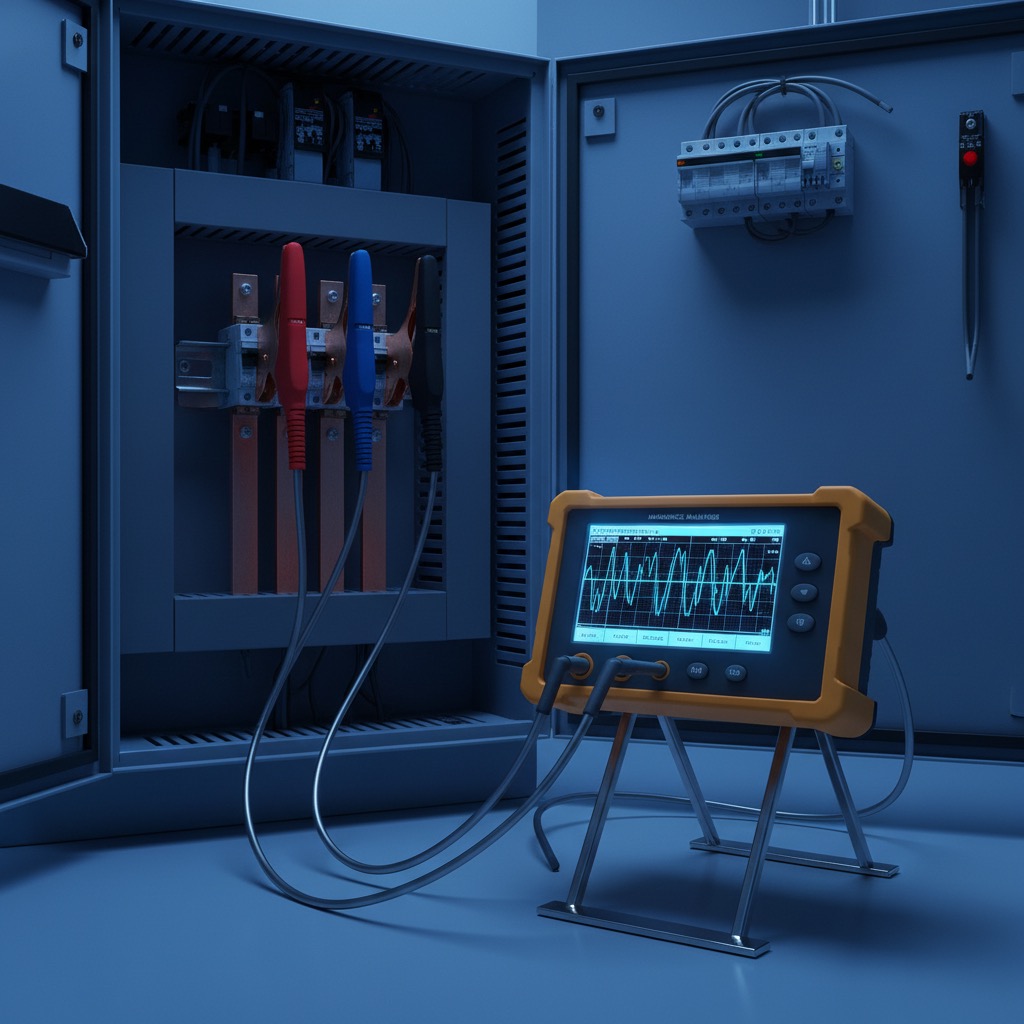
How they are measured: with power-quality analyzers during campaigns of 7 to 30 days, in windows covering the plant's typical operation.
Grid Code limit 2026: the key indicator is current THD (Total Harmonic Distortion). The practical rule:
- Individual current THD ≤ 5%
- Total current THD ≤ 8–15% depending on voltage level
- Each individual harmonic with its own limit (the 5th and 7th are the most restrictive)
The normative reference framework is IEEE 519-2014 plus specific annexes of the Grid Code.
2. Flicker
Rapid, repeated variations in voltage magnitude, perceived visually as flickering in incandescent lighting. In industry, the main generators:
- Electric arc furnaces (the most severe)
- High-capacity welders (especially older ones)
- Frequent starting of large motors
- Crushers and mills with variable load
Why it matters: beyond the annoying flicker, it indicates power fluctuations that stress sensitive equipment on the SEN.
How it is measured: with analyzers that compute the Pst (short-term, 10 min) and Plt (long-term, 2 hours) indicators defined by IEC 61000-4-15.
Grid Code limit 2026:
- Pst ≤ 1.0 (irritation threshold)
- Plt ≤ 0.8 (accumulated)
3. Sags and swells
Momentary drops (sags) or rises (swells) in voltage, typically lasting from 0.5 cycles to 1 minute. Common causes:
- Starting of large loads
- Faults on nearby lines
- Capacitor switching
- Electrical storms
Why they matter: sags cause unplanned stoppages in sensitive equipment (PLCs, drives, servomotors). In the automotive and electronics industries, a sag of 0.3 seconds can stop a production line.
How they are measured: continuous event logging with timestamp, magnitude, and duration. Reported with CBEMA / ITIC curves.
Grid Code limit 2026: the Code does not impose an absolute maximum number of events, but it requires logging and reporting for analysis. Events affecting third parties on the SEN can lead to observations.
4. Voltage imbalances
Differences between the magnitudes of the 3 phases of the three-phase system. Causes:
- Uneven distribution of single-phase loads
- Uncleared ground faults
- Inadequate transformer configurations
Why they matter: three-phase motors lose efficiency and overheat with imbalances > 2%. At 5% they can be irreversibly damaged.
How they are measured: negative / positive imbalance indicator, calculated with symmetrical components.
Grid Code limit 2026: voltage imbalance ≤ 2% under normal operation.
How to run a measurement campaign acceptable to the CRE
A power-quality campaign that the CRE accepts requires:
- Certified analyzer (Class A per IEC 61000-4-30): typical brands are Fluke 1770/1750, Dranetz, Hioki PQ3198, Elspec G4500.
- Minimum duration of 7 continuous days. For industries with variable cycles (food with seasonal shifts, manufacturing with cyclical weekly production), 30 days is recommended.
- Simultaneous measurements at least at: the service entrance (CFE/SC inlet), main substation busbars, and identified critical nodes.
- Trigger configured to capture transient events (sags, swells, interruptions).
- Structured report with the 95th and 99th percentiles of each parameter, compared against the Grid Code limits.
- Signature of a certified expert before the CRE.
The typical cost of a comprehensive measurement campaign ranges between $150,000 and $450,000 MXN depending on plant size and duration.
Corrective measures according to the problem detected
If there are harmonics outside the limit
Tuned passive filters (the most used, medium cost):
- LC filters tuned to the 5th, 7th, and 11th harmonic
- Typical cost: $300,000 – $1,500,000 MXN depending on size
Active filters (more sophisticated, high cost):
- Inject opposing currents in real time
- Typical cost: $800,000 – $3,500,000 MXN
- Recommended in industries with variable harmonic profiles
Isolation or phase-shifting transformers (specific cases):
- To isolate areas with highly nonlinear loads
- Cost: $400,000 – $2,000,000 MXN
If there is excessive flicker
- Static VAR compensator (SVC) or STATCOM for heavy loads such as arc furnaces
- Acceleration ramp when starting large motors (drive or soft starter)
- Load smoothing via flywheels or batteries
If there are frequent sags
- Industrial UPS for critical loads (PLCs, servers, control equipment)
- Dynamic backup systems (DVR - Dynamic Voltage Restorer) for entire lines
- Backup battery bank (BESS) if sags are very frequent
If there are imbalances
- Reorganization of single-phase loads to balance across phases
- Verification of the grounding system
- Adjustment of transformer taps if the service entrances arrive unbalanced from CFE
Permanent monitoring equipment
The 2026 Grid Code favors —though it does not require in all cases— installing permanent power-quality monitoring at the service-entrance point. This allows:
- Early detection of drifts before exceeding limits
- Evidence before the CRE in case of an observation
- Data for continuous energy optimization
Typical permanent monitoring equipment (Schneider Power Logic, Eaton Power Xpert, Fluke 174x, ABB M2M) costs between $80,000 and $350,000 MXN installed, with a service life of 8–12 years. It is an investment that pays for itself quickly if it prevents a single penalty.
Industries at highest risk of power-quality problems
- Steel, foundry, and metallurgy — arc furnaces are the #1 cause of harmonics and flicker in Mexican industry
- Cement — mills and crushers generate significant flicker
- Automotive — industrial welders and paint lines
- Plastics — extruders with large drives
- Electronics manufacturing — large numbers of drives and rectifiers in aggregate
- Chemical and petrochemical — large pumps and compressors
If you are in any of these sectors, assume you need power-quality measurement as a basis for Grid Code compliance.
The connection with energy efficiency
Power-quality corrective measures frequently also improve efficiency. A capacitor bank correctly sized to correct harmonics also corrects power factor, which reduces the CFE penalty. An active filter prevents transformer overheating, prolonging its service life.
That is why in Plan 360 Management we integrate power quality with industrial energy optimization: the same corrective works solve two problems at once.
Do you need to measure your power quality?
At Enerlogix we run power-quality measurement campaigns with Class A analyzers, certified experts before the CRE, and integration of the analysis into our Grid Code service within the Plan 360 Management. If your plant has CRE observations in this area, or if you have never done a formal measurement, request a free Plan 360 Management evaluation. Within 10 business days we deliver a diagnostic and proposal with no obligation.
To understand the full framework, read the Grid Code 2026 — Complete Guide pillar and the electrical studies of the Grid Code.
Frequently asked questions
The key indicator is current THD (total harmonic distortion). The practical rule is individual current THD less than or equal to 5% and total current THD between 8 and 15% depending on the voltage level, with its own limit for each individual harmonic (the 5th and 7th are the most restrictive). The reference framework is IEEE 519-2014 plus specific annexes of the Grid Code.
A comprehensive campaign ranges between 150,000 and 450,000 MXN depending on plant size and duration. For the CRE to accept it, it requires a certified Class A analyzer per IEC 61000-4-30, a minimum of 7 continuous days (30 days in industries with variable cycles), simultaneous measurements at the service entrance and critical nodes, a trigger for transient events, a report with the 95th and 99th percentiles, and the signature of a certified expert.
There are three routes. Passive filters tuned to the 5th, 7th, and 11th harmonic are the most used and cost between 300,000 and 1,500,000 MXN depending on size. Active filters inject opposing currents in real time, cost between 800,000 and 3,500,000 MXN, and are recommended for variable harmonic profiles. Isolation or phase-shifting transformers, for specific cases, range from 400,000 to 2,000,000 MXN.
Flicker is rapid, repeated variations in voltage magnitude, perceived as flickering in lighting, generated mainly by arc furnaces, large welders, and frequent motor starting. It is measured with the Pst (short-term, 10 minutes) and Plt (long-term, 2 hours) indicators defined by IEC 61000-4-15. The 2026 Grid Code limits are Pst less than or equal to 1.0 and Plt less than or equal to 0.8.
The highest-risk ones are steel, foundry, and metallurgy (arc furnaces are the number-one cause of harmonics and flicker), cement (mills and crushers), automotive (welders and paint lines), plastics (extruders with large drives), electronics manufacturing (many drives and rectifiers in aggregate), and chemical and petrochemical (large pumps and compressors). In these sectors it is wise to assume measurement is a basis for compliance.