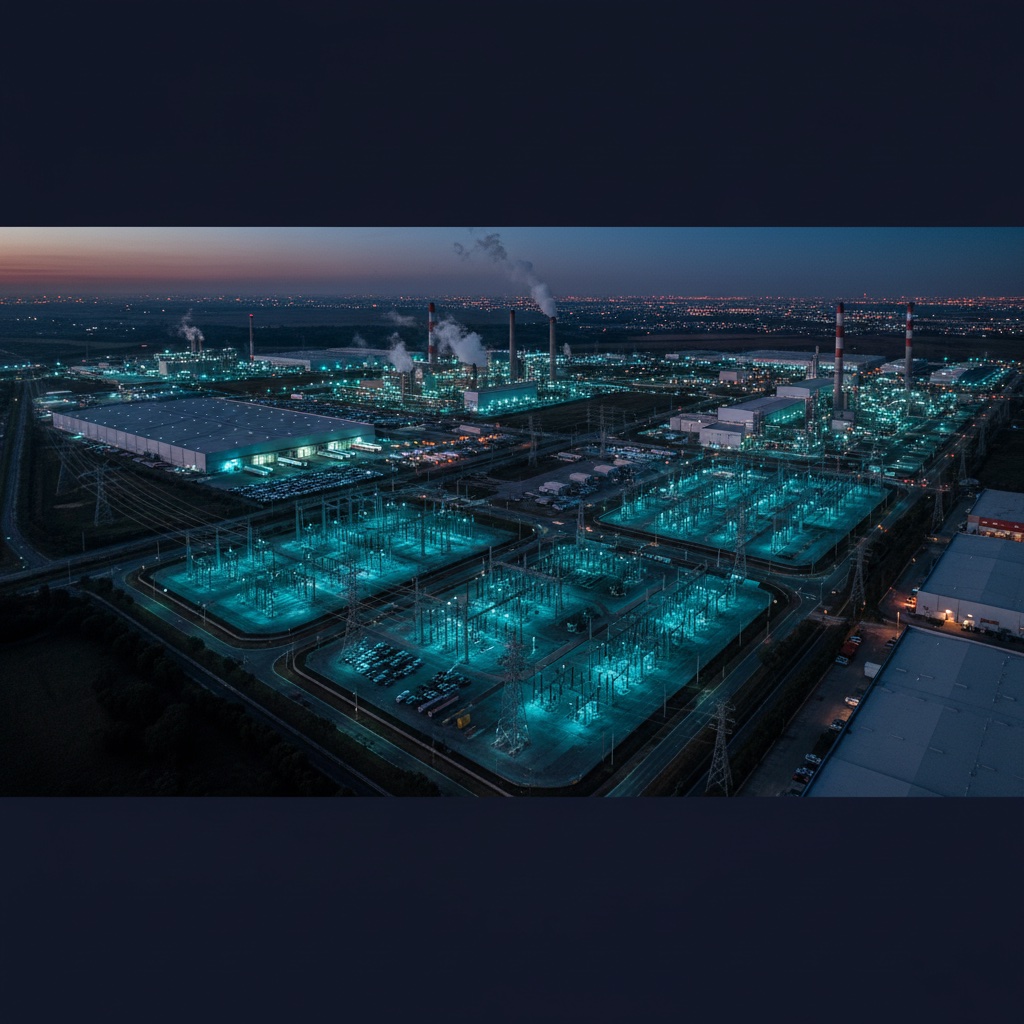
In the food and beverage industry, energy is not just an operating cost: it is a critical factor for safety and continuity. Operating production plants, cold-chain systems, and distribution centers 24/7 requires surgical precision in managing the Wholesale Electricity Market (MEM).
For AAA companies in Mexico, the challenge heading into 2026 is clear: how do you grow production without the electricity bill devouring the profit margin? The answer isn't buying cheaper energy —that's only the first step— but managing it with intelligence and neutrality throughout the fiscal year. It is one of the scenarios where specialized energy consulting delivers a multiple of its cost.
The Value of the Multi-Site Strategy: Case Studies
At Enerlogix we have transformed the operational complexity of companies with a national footprint into a measurable financial advantage. Two cases illustrate how multi-site management works in practice.
1. Multi-Site Bajío: Risk Management and Massive Savings (MX$72M)
A company with three high-performance plants and consumption of 82,000 MWh per year was looking for an aggressive but controlled strategy. The dilemma was "risk appetite": how to take advantage of low market prices without becoming exposed to volatility?
- The solution: we structured a contract based on intelligent management of energy and demand blocks, tailored specifically to each plant's load profile.
- The result: in 2024, the client achieved savings of MX$72,000,000, securing operational stability across its three load centers.
2. Multi-Site Northeast: Precision Nomination (MX$24M)
With operations in three states and consumption of 45,000 MWh, cost uncertainty was the CFO's main enemy.
- The solution: we implemented a weekly evaluation process to define hourly consumption patterns. By applying precise adjustment factors in the energy nominations, we mitigated the deviations that suppliers typically penalize with punitive charges.
- The result: cumulative savings of MX$24,000,000 during 2024 and ongoing support since 2020. You can see the Multi-Site Northeast case with the full detail.
Plan 360: The Pillars for the Food Sector
These cases are not isolated measures, but the application of the Plan 360 Management method to the food sector: three levers operated simultaneously under a single team.
Data Intelligence and UDM (Utility Data Management)
For companies with multiple locations, visibility is power. Our UDM service acts as the central brain that consolidates invoices from all plants, detecting billing errors before they hit consolidated cash flow.
Neutrality and Independence
Unlike a supplier, at Enerlogix we are impartial. If a qualified supplier stops being competitive or shows financial instability before the new National Energy Commission (CNE), our loyalty is with the client to seek the best alternative in the market, with no friction. It is the supplier's dilemma versus independent advisory put into practice.
Sustainability and Compliance (CELs and IRECs)
The food industry is under global scrutiny for its ESG goals. We manage renewable-energy accreditation through Clean Energy Certificates (CELs), ensuring your brand not only saves money but strengthens its reputation as a sustainable company —a critical asset for corporate clients and international retailers.
Conclusion: From Cost Center to Strategic Advantage
The savings exceeding MX$96 million achieved in these two case studies demonstrate that energy, well managed, is the most profitable investment to protect the operating margin. The pattern repeats in other sectors: see how a chemical plant in Tlaxcala cut its electricity cost by 31% with the same method. At Enerlogix we don't just help you buy energy: with our energy consulting service we help you lead your sector through operational efficiency.
Do you know how much your plant network could be saving with more precise energy nomination? Let Enerlogix perform a diagnostic evaluation of your load centers and discover the savings potential for your 2026 budget. Contact us.
Frequently asked questions
In the two documented cases, savings exceeded 96 million pesos. A multi-site company in Bajío with three plants and consumption of 82,000 MWh per year achieved 72,000,000 MXN in savings in 2024, and another in the Northeast with operations in three states and 45,000 MWh accumulated 24,000,000 MXN that same year.
It is the projection of how much energy the plant will use hour by hour. If the projection falls outside the tolerance band, suppliers apply punitive charges. In the Northeast case, Enerlogix implemented a weekly evaluation to define hourly consumption patterns and apply precise adjustment factors, mitigating those deviations.
Because it is not just an operating cost: it is a critical factor for safety and continuity. Operating production plants, cold-chain systems, and distribution centers 24 hours a day requires surgical precision in managing the Wholesale Electricity Market, since any interruption directly affects the product.
Through the multi-site strategy and the Utility Data Management (UDM) service, which acts as a central brain consolidating the invoices of all plants and detecting billing errors before they hit consolidated cash flow. Data from the different regions is unified into performance reports that ease financial decision-making at the corporate level.
It is safe as long as you have a hedging strategy. Enerlogix defines what percentage of consumption should be at a fixed price and what can fluctuate, in order to take advantage of low market prices without becoming exposed to volatility. This maximizes savings without risking profitability or the operational stability of the load centers.
As independent and neutral advisors, we audit the legality of those changes before the new National Energy Commission. If the contract allows it, we lead the renegotiation or the migration toward a supplier with greater financial strength. Our loyalty is with the client, not with a supplier, so we always seek the best alternative in the market with no friction.
Beyond reducing OPEX, energy efficiency and the use of renewables accredited with CELs and IRECs improve the company's valuation before investors and can open access to preferential green credits. In the food industry, under scrutiny for its ESG goals, they also strengthen the brand's reputation before corporate clients and international retailers.