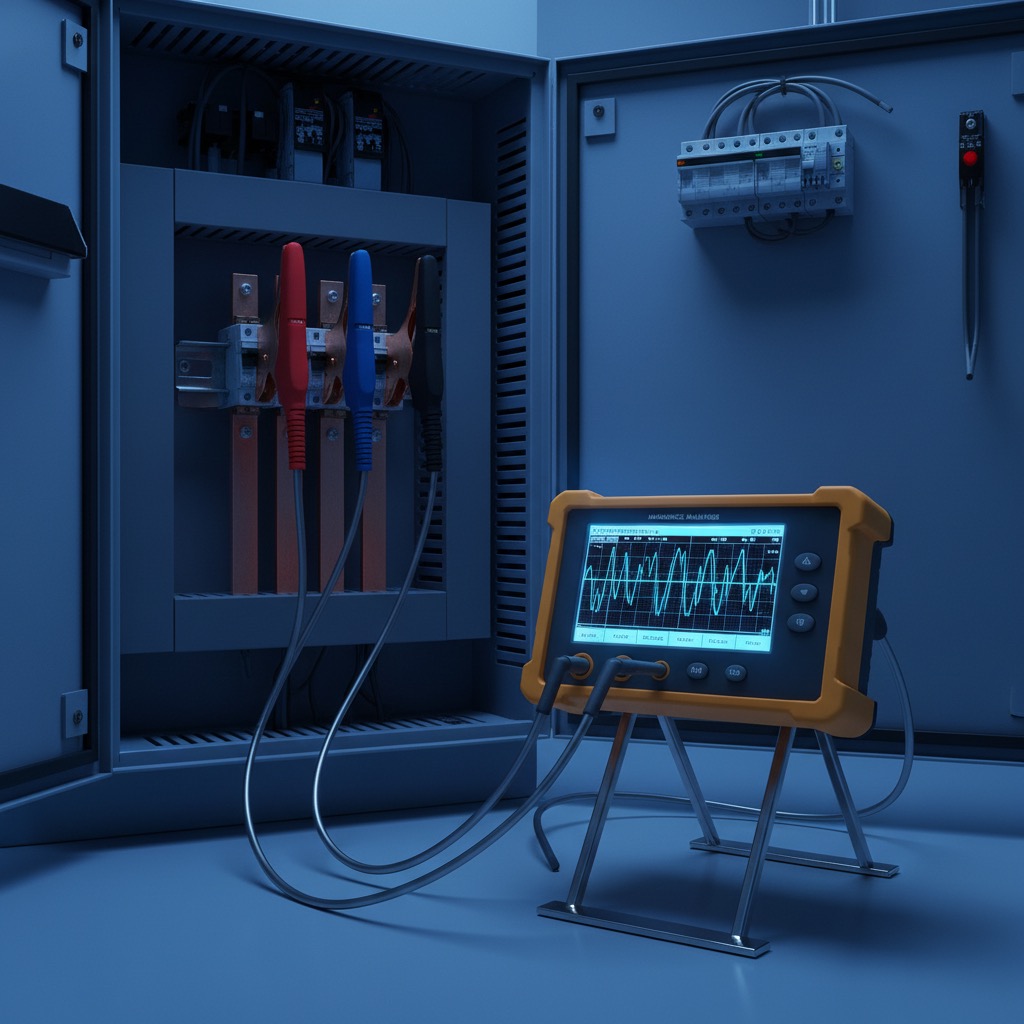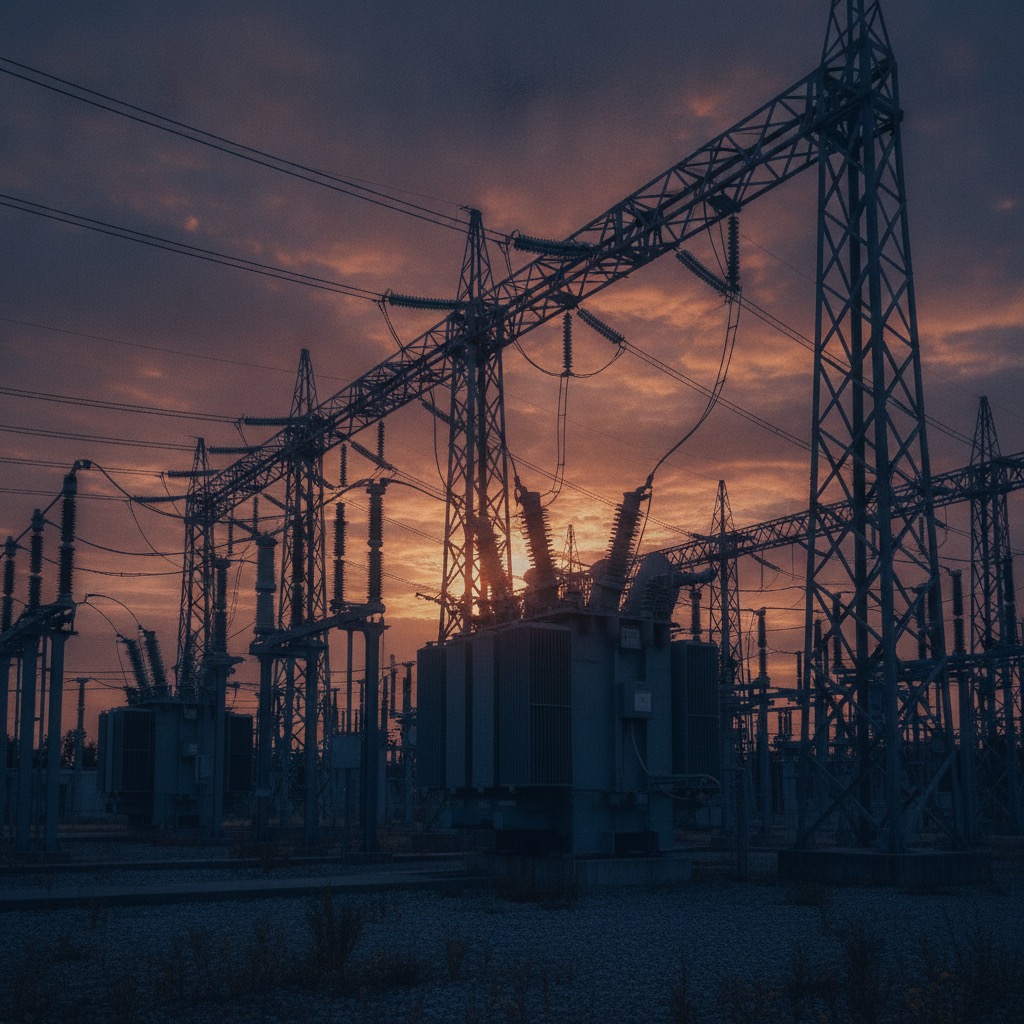
The substation is the most expensive and most critical asset of your electrical installation, and almost always the worst maintained. It runs silently for years until one day it doesn't: a transformer that goes out of service in the middle of production, a relay that didn't trip when it should have, a connection that overheated until it failed. None of those failures arrives without warning. They all leave measurable traces —hot spots, dissolved gases, insulation resistance that drops— that a preventive maintenance program detects months before the shutdown. This is the checklist, organized by frequency, so your maintenance manager knows exactly what to inspect and when.
Why is the substation the asset where the Grid Code lives?
The substation is not just iron and oil: it is where the protection coordination and the electrical studies that the Grid Code requires physically reside. The relays you set, the breakers that must open in milliseconds, and the transformers whose impedance went into your studies all live there. If the asset degrades, the compliance you documented stops being real.
Put another way: you can have flawless Grid Code electrical studies on paper, but if the relays are never tested and the breakers are not maintained, the coordination you designed does not exist in practice. Substation preventive maintenance is what keeps the entire regulatory scaffolding you built physically alive.
What does NOM-029-STPS-2011 require regarding electrical maintenance?
NOM-029-STPS-2011, "Maintenance of electrical installations at workplaces - Safety conditions," requires the employer to have an up-to-date maintenance program, to perform risk analyses by activity, and to allow only authorized and trained personnel to work on hazardous areas such as substations and energized lines. It is not optional: it is the legal basis of the program.
Maintenance is not just reliability: it is a legal and safety obligation
This changes the conversation with management. Substation maintenance is not justified solely by avoiding shutdowns; it is a requirement of NOM-029-STPS-2011 published in the Official Gazette of the Federation. A workplace without a documented electrical maintenance program and without risk analyses is in non-compliance, regardless of whether or not it has had a failure. And residual energy, arc flash, and deficient grounding are risks of death, not of productivity.
The checklist by frequency
This is the differentiator of the article: an actionable checklist that organizes each activity by frequency, says what it detects, and what happens if you skip it. The frequencies are typical of the medium-voltage industry (up to 34.5 kV); the exact plan depends on the equipment manufacturer, the criticality of the load, and prior findings. Adjust it with your responsible engineer.
| Activity | Frequency | What it detects | Consequence of skipping it |
|---|---|---|---|
| Visual inspection and instrument readings (oil leaks, noise, level, temperature, alarms) | Monthly | Incipient leaks, overloads, ignored alarms | Evident failure that goes weeks without attention |
| Infrared thermography with energized equipment (connections, bushings, terminations, busbars) | Quarterly / half-yearly | Hot spots from a loose or oxidized connection before it fails | Connection that overheats until it opens the circuit without warning |
| Battery bank and control DC system review | Quarterly / half-yearly | Degraded batteries that would leave protections without power | Relays and breakers without power supply: they don't trip in a fault |
| Functional and injection testing of protection relays | Annual (or after a fault event / change of settings) | Miscalibrated relays or ones that don't operate on their curve | The relay doesn't trip: the fault escalates, damages equipment, and breaks the coordination |
| Insulation resistance (megger) and polarization index on transformer and cables | Annual | Insulation degraded by moisture or aging | Internal dielectric failure: transformer out of service |
| Physical-chemical and dissolved gas analysis (DGA) of the dielectric oil | Annual | Internal arcing, overheating, and moisture in the transformer | Catastrophic transformer failure with no prior diagnosis |
| Connection torque, cleaning, and antioxidant application | Annual (with scheduled shutdown) | Thermal loosening and oxidation that raise contact resistance | Hot spot, energy loss, and eventual connection failure |
| Grounding grid resistance and continuity check | Annual | Degraded or discontinuous physical ground | Risk of electric shock to personnel and protections that don't operate well |
| Mechanical maintenance of breakers (opening/closing times, contacts) | Annual / biennial | Slow or jammed breaker that doesn't clear the fault in time | The breaker doesn't open: the damage propagates upstream |
Tests with energized equipment vs. those requiring a scheduled shutdown
A key operational distinction for the maintenance manager: thermography, visual inspection, and oil sampling are done with the substation energized, without interrupting production. Insulation resistance, connection torque, relay injection tests, and breaker maintenance require an outage. Planning the annual shutdown window in advance is what prevents these activities from "never getting done for lack of time."
What fails when substation maintenance is not done?
Three things fail at once. Operationally, unscheduled shutdowns appear: the transformer or breaker goes out of service in the middle of production, with hours of plant downtime. From a regulatory standpoint, the Grid Code protection coordination stops being real. And in terms of safety, overheated connections and degraded grounds become a fire and arc-flash risk.
The relay that doesn't trip is the worst-case scenario
Of all the failures, the most expensive is not the transformer's: it is the relay that doesn't operate. A miscalibrated relay that doesn't trip turns a small, isolatable fault into a major event that damages the transformer, opens breakers upstream, and drags down the entire plant. That is why annual relay injection tests are non-negotiable; they are the heart of Grid Code protection coordination. A flawless coordination study is useless if the physical relay does not respond as the paper says.
How does maintenance connect with power quality?
The physical condition of the substation directly affects power quality. Loose connections, deteriorated bushings, and aged transformers introduce losses and distortion. Preventive maintenance and the monitoring of harmonics and power quality are the same discipline seen from two angles: keeping the asset healthy.
A transformer with degraded insulation, an unchecked capacitor bank, or high-resistance connections are not only a failure risk: they also worsen the power factor and the distortion that the Grid Code measures. That is why the substation maintenance program and the power quality program must be coordinated, not run separately. Both protect the same parameters that CFE and CENACE monitor at your interconnection point.
How Enerlogix integrates maintenance into compliance
At Enerlogix we do not treat substation maintenance as a loose electricians' checklist, but as part of Plan 360 Management: we tie it to your electrical studies, your protection coordination, and your Grid Code compliance. We verify that the relay settings in your studies are the ones the laboratory actually tests, that the frequency complies with NOM-029-STPS-2011, and that every thermography or DGA finding becomes a corrective action with a date, not a report no one reads.
As an independent consultancy, we sell neither equipment nor laboratory services: our only product is that your substation is healthy and your compliance is real. For the full framework, review the complete Grid Code 2026 guide and the electrical studies required by the Grid Code.
Request a free evaluation or learn about our Grid Code service. We work on your real installation, not on a generic manual.
Frequently asked questions
It depends on the activity. Visual inspection is monthly; thermography and the battery bank review, quarterly or half-yearly; and insulation tests, connection torque, oil analysis, and relay tests are done at least once a year, normally in a scheduled shutdown window. The criticality of the load and the manufacturer can adjust these frequencies.
Yes. NOM-029-STPS-2011 requires the employer to have an up-to-date maintenance program for the workplace's electrical installations, to perform risk analyses by activity, and to allow only authorized and trained personnel to work on hazardous areas such as substations and energized lines. Not having it is non-compliance, even if no failure has occurred.
The physical-chemical analysis evaluates the condition of the oil as an insulator, and the dissolved gas analysis or DGA detects gases that reveal internal arcing, overheating of the cellulose, or moisture ingress, all without disconnecting the equipment. It is the test that most anticipates a catastrophic transformer failure, because it sees the problem while it is still incipient.
Because the study defines the settings on paper, but only the injection test confirms that the physical relay operates on that curve. A miscalibrated relay that doesn't trip turns a small fault into a major event that damages equipment and breaks the coordination. That is why relay tests are done at least once a year or after any fault event or change of settings.
Three things happen at once: unscheduled shutdowns when a transformer or breaker goes out of service, Grid Code non-compliance because the protection coordination stops being real, and a safety risk from overheated connections, arc flash, and degraded grounds. The failure almost never arrives without warning, but without maintenance those warnings are never read.