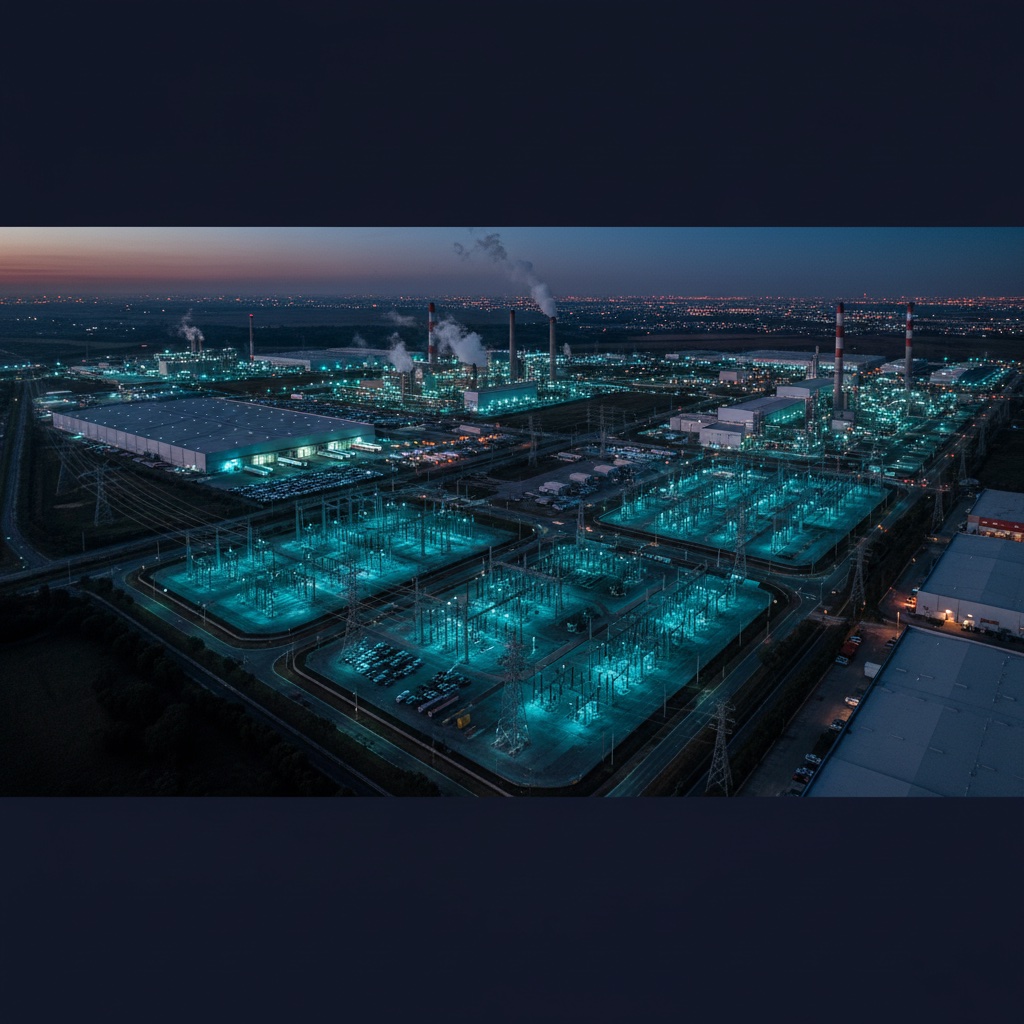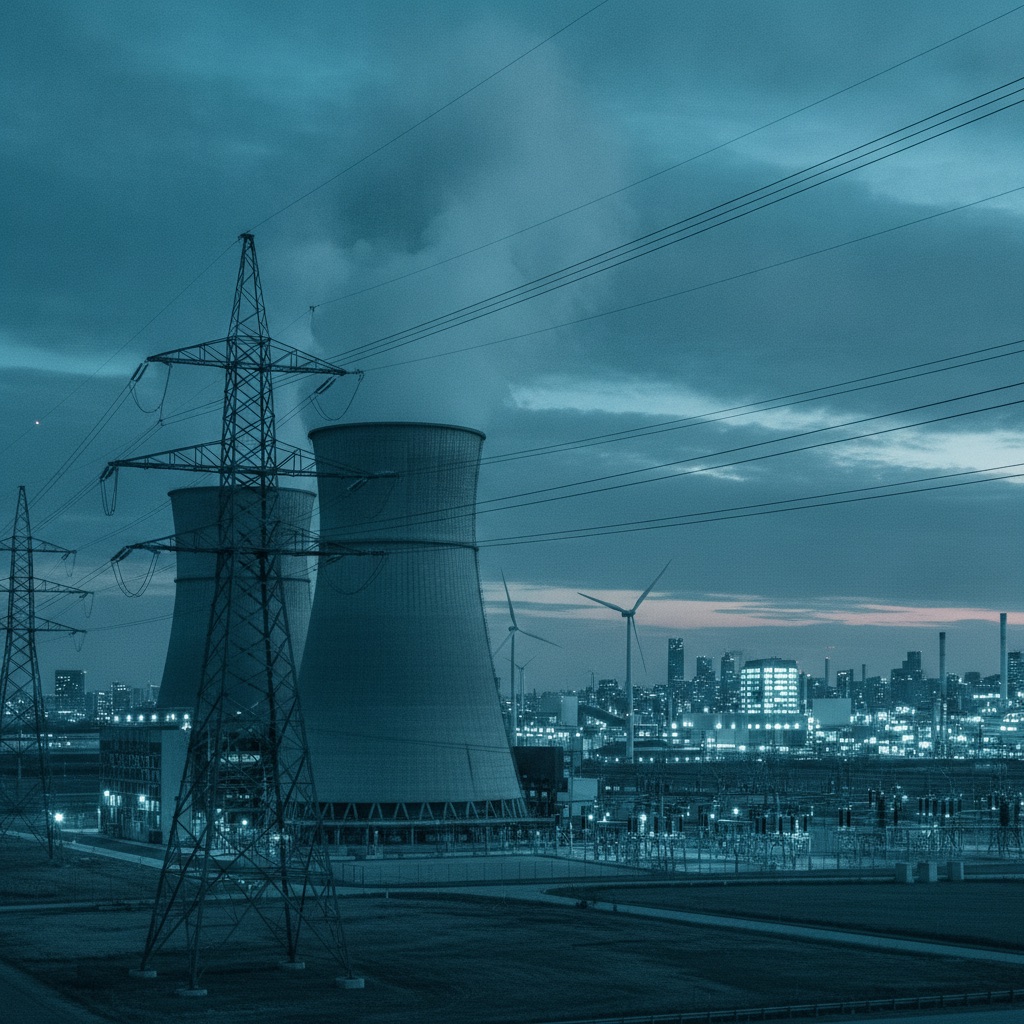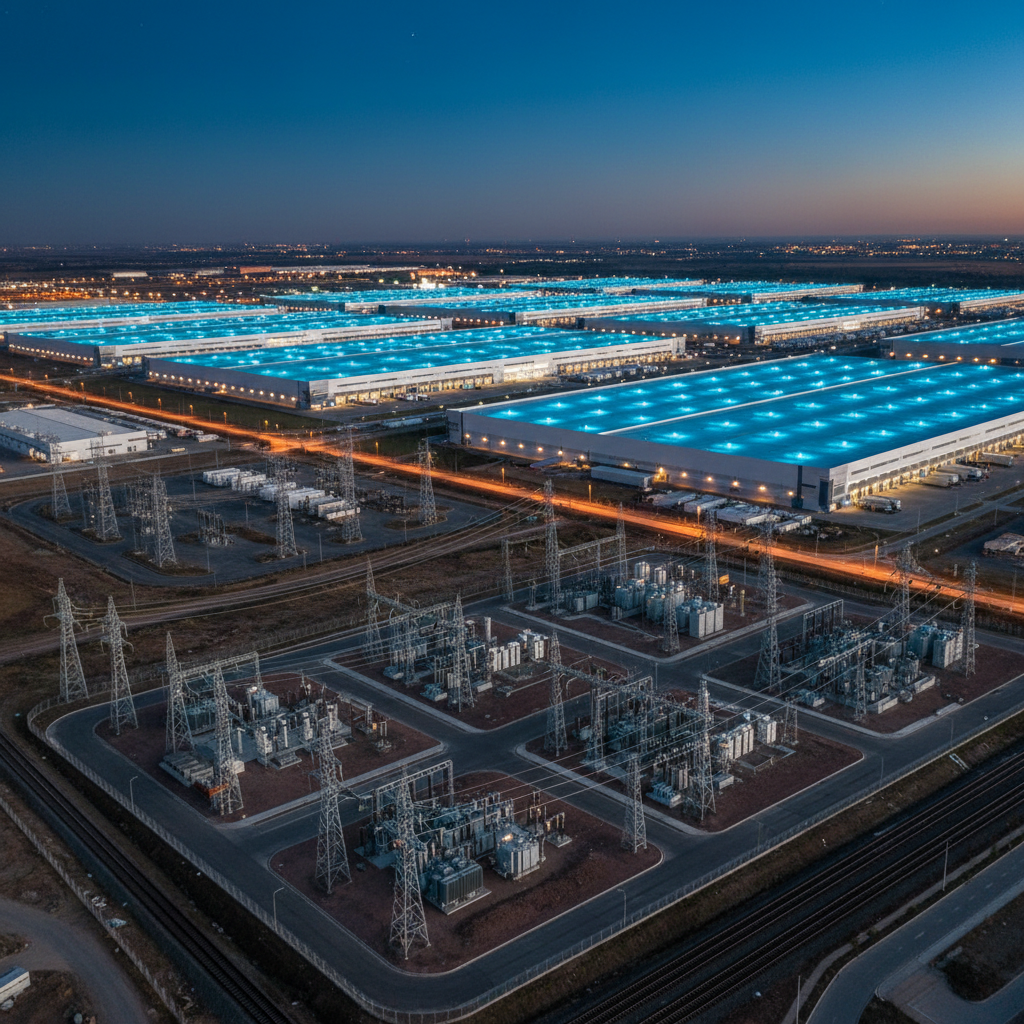
Mexico faces an unprecedented energy paradox: it has never received more foreign direct investment —$40,871 million dollars in 2025, an all-time record— and at the same time, 91% of its industrial parks report failures in the electricity supply. The tension between nearshoring and industrial electricity supply has become the most critical bottleneck for the country's growth.
In this analysis we document the real numbers of the crisis, the most affected states, why CFE's infrastructure isn't enough and —more important— what concrete strategies are being adopted by the industrial companies that can't wait for the State to solve the problem.
The Opportunity of the Century and the Energy Bottleneck
The nearshoring phenomenon —the relocation of production chains from Asia to Mexico to bring them closer to the North American market— generated a wave of industrial investment whose magnitude no analysis anticipated. Between 2023 and 2025, Mexico posted three consecutive record years of Foreign Direct Investment. Manufacturing captured $15,187 million dollars in the first nine months of 2025, 37.1% of the national total.
Nuevo León, Chihuahua, Coahuila, Guanajuato, and Querétaro concentrate the bulk of the projects. Industrial park occupancy in these states reached 98% according to the BBVA Research-AMPIP survey of May 2024. The construction of 128 new industrial parks is projected between 2024 and 2030, with investments of $6,200 to $8,600 million dollars.
The problem: all that manufacturing activity needs reliable electricity in sufficient volume. Mexico does not have that electricity available at the speed the investment demands.
The country's electricity demand grew 3.5% in 2023, but installed generation capacity rose only 0.6%. The transmission grid expanded at a pace of just 0.09% to 0.10% per year. The system's reserve margin fell to 6% in May 2024 —half the recommended minimum of 15% to 20%— affecting 24 of the country's 32 states.
The Numbers of the Crisis: More Than 80 Industrial Projects Stalled
The Mexican Association of Private Industrial Parks (AMPIP) confirmed that more than 80 industrial installation or expansion projects are stalled or directly at risk for lack of electrical infrastructure. These are not minor delays: they are committed investments that cannot start because there is literally no electricity connection available with the required capacity.
Wait times for new high-voltage connections in the states of greatest industrial activity —Nuevo León, Coahuila, Guanajuato, Querétaro, and Baja California— reached up to 12 months in 2024-2025. For a company that has just closed a manufacturing contract with a U.S. client under USMCA terms, a 12-month delay in electricity supply can mean losing the entire contract.
AMPIP estimates that by 2030 Mexico's industrial footprint could grow by an additional 23 million square meters, generating a need for 3,000 MW of additional electrical capacity for industrial parks alone. That is the equivalent of building three combined-cycle plants in six years.
CFE launched its "Energía para la Industria" program to add 2,500 MW destined for 103 industrial parks in the most critical states. Federal investment in electricity for 2026 is $61,100 million pesos, but this represents the second consecutive year of real cuts to electricity investment. The gap between what is needed and what is invested keeps widening.
The States Where Electricity Stalls Investment
| State | Energy situation | Industrial context |
|---|---|---|
| Nuevo León | Highest FDI in the country: $3,628 million USD in 2025 (+72.9%). Santa Catarina and Apodaca parks with capacity constraints. Plan: +3,200 MW in 4 years. | Automotive, aerospace, and advanced manufacturing hub. Monterrey as the preferred destination for North American investment. |
| Chihuahua | Top manufacturing exporter: $26,230 million USD in Q2 2025. Produces 50% of the servers for Meta, Amazon, and Google. Ciudad Juárez with insufficient transmission infrastructure. | High-tech maquiladora industry. Border with El Paso as a unique logistical advantage. |
| Coahuila | Generates 20% of national vehicle and auto-parts production. Photovoltaic projects in Carbón II and Río Escondido (556 MW, $15,400 million pesos). | Consolidated automotive cluster. 24/7 demand from assembly and stamping plants. |
| Guanajuato | 60% of electricity demand goes to the industrial sector. Annual demand growth ~6%. Slowness in new transmission lines. | Automotive, footwear, and food industries. Bajío Corridor as the densest industrial zone in central Mexico. |
| Querétaro / Baja California | Tijuana among the cities with the highest concentration of maquiladoras. Querétaro with a strong aerospace and electronics presence. | High dependence on export manufacturing and requirements for continuous energy on production lines. |
91% of Industrial Parks With Supply Failures
AMPIP revealed in 2023 that 91% of the country's industrial parks experienced at least one failure in the electricity supply during that year. This figure was corroborated by the Northeast Foreign Trade Commission (Comce Noreste), which reported that 91% of companies in industrial parks identified difficulties guaranteeing the electricity supply, and that roughly 40% also faced problems with the natural gas supply.
An analysis by SiiLA found that 38% of industrial buildings in the main markets do not meet the established electrical minimum of 150 kVAs per 10,000 square meters. The Bank of Mexico, in its Manufacturing Sector Activity Survey (EMAER), reports that the southern region is the most affected, with 81.6% of companies experiencing interruptions, followed by the center at 55% and the north at 49.7%.
Important to clarify: the 91% figure includes interruptions of any magnitude during the year —from a voltage fluctuation to a prolonged outage. It does not imply that 91% of parks operate with deficient supply on a permanent basis, but it does indicate that grid reliability is a real operating risk for the vast majority.
For the precision-manufacturing industry —auto parts, aerospace, electronics, cold-chain food— even an interruption of minutes can mean the loss of entire batches, damage to sensitive equipment, and contractual penalties. In the specific case of the Just-in-Time automotive industry, where the MEM contract can generate deviation fines, active consumption management is as critical as supply reliability. The reliability of the electricity supply is not just a cost: it is a requirement for operational continuity.
Why CFE's Infrastructure Isn't Enough: The Structural Diagnosis
Mexico's industrial electricity deficit is neither new nor accidental: it is the result of years of underinvestment in generation, transmission, and distribution infrastructure. IMCO documented that CFE's real investment in 2023 represented just 21% of what the National Electric System Development Program (PRODESEN) deemed necessary for that year.
Mexico's installed generation capacity is 93,089 MW according to IMCO, but the effectively available capacity is significantly lower due to equipment obsolescence, deferred maintenance, and transmission constraints. The new planning program (PLADESE) contemplates 76,000 MW of additional capacity between 2025 and 2039, of which 28,004 MW in the short term (2025-2030). However, IMCO estimates that if the projects are not developed on an accelerated basis, the national deficit by 2030 could reach 48,452 GWh —a gap that would cost at least $16,378 million dollars to cover under the most efficient scenario.
The problem is not only generation: the transmission grid is the most critical bottleneck. Building a high-voltage line requires federal, state, and municipal permits, rights-of-way, public tenders, and construction times of 3 to 5 years. CFE cannot accelerate this process overnight no matter how much budget it has available.
Record Foreign Investment, But With Warnings
Mexico received $40,871 million dollars in Foreign Direct Investment in 2025, the highest figure in its history and its fifth consecutive year of growth. However, analysts warn that Mexico is not fully seizing the historic nearshoring window: FDI into China fell from $344,000 million dollars in 2021 to $18,600 million in 2024, and Mexico has captured only a fraction of those flows that could have been redirected to the country.
The energy constraint is an explicit factor in some investors' decision to choose alternatives such as Vietnam, India, or Poland over Mexico. When a multinational company evaluates where to set up its next plant, the availability, reliability, and price of energy are among the top three decision criteria. A 12-month wait for an electricity connection does not compete with the speed that investment cycles demand.
How the Private Sector Responds: The Three Strategies That Work
1. Distributed Generation and Self-Supply
Mexico's installed distributed generation capacity reached 3,364 MW at the close of 2023, with growth of 28.7% over 2022. The projection for 2037 is 11,442 MW, indicating a structural trend toward self-generation. Companies such as Energía Real announced plans of $700 million dollars for on-site solar generation, storage, and private grids in industrial parks.
For companies with consumption of 2 MW or more, the installation of a 2-to-5 MWp photovoltaic system can cover between 30% and 60% of daytime consumption, reducing grid dependence and generating price certainty for that consumption component over 20-25 years. The accelerated tax depreciation (35% to 91%) available until September 2030 makes the payback period especially competitive.
2. PPA Contracts With Private Generators
Power Purchase Agreement (PPA) contracts with renewable energy generators have consolidated as the preferred model for large industrial consumers seeking energy independence without their own capital investment. Under this scheme, the generator finances, builds, and operates the plant; the industrial company buys the energy at a fixed price for 10 to 25 years, with typical savings of 25% to 35% from the first year.
Among the most active generators in Mexico with industrial PPA contracts are: Enlight (solar and wind), Energía Real, Atlas Renewable Energy, and Acciona Energía. Reference clients include General Motors, Grupo Lomas, and high-consumption miners —a sector where energy efficiency in mining can mean tens of millions of pesos in annual savings. In December 2025, SENER approved a call for 20 new renewable projects with $4,700 million dollars in private investment and 5,970 MW of additional capacity.
3. Migration to the Wholesale Electricity Market (MEM)
For companies with consumption equal to or greater than 1 MW that do not wish to install their own infrastructure, migration to the MEM through a Qualified Services Supplier is the lowest-investment alternative with the greatest immediate impact on energy cost. Operating as a Qualified User means meeting the 1 MW threshold and registering with the CRE, a process whose timeline and risk planning is worth understanding before getting started. A fixed-price qualified supply contract of 5 to 15 years provides the price certainty that supply chains with international clients require.
The impact is tangible when the contract fits the plant's real profile: an electronics and entertainment operation in Jalisco, which after a radical operational change was paying a tariff comparable to CFE Basic Supply, restructured its contracting scheme with a Qualified Supplier and went on to save MX$29 million in 2024 (see the full case study).
In addition, energy storage systems (BESS, Battery Energy Storage Systems) make it possible to store energy during low-price periods and use it during peak periods, reducing the demand charge on the industrial tariff by up to 40%. A January 2025 presidential decree requires new renewable projects to incorporate 30% co-located storage capacity, which will accelerate the availability of BESS in the Mexican market.
The Role of the Independent Consultant in the Energy Crisis
The electricity supply crisis has created a market in which sellers of energy solutions —solar plant builders, BESS operators, qualified suppliers— have a direct incentive to convince industrial companies that their particular solution is the right one. This dynamic does not always produce the optimal decision for the client.
An independent energy consultant like Enerlogix evaluates every available alternative with no conflict of interest: it analyzes the company's real consumption profile, models the expected savings under each alternative (PPA, MEM via our service for Qualified Users, distributed generation, efficiency), compares the conditions of the contracts available in the market, and manages the implementation of the selected solution. Its compensation does not depend on which solution the client chooses, but on the quality of the result.
With more than 100 load centers registered in the MEM and clients such as Whirlpool, Agnico Eagle, and Littelfuse, Enerlogix has proven operational experience in the real conditions of the Mexican energy market of 2025.
Conclusion: The Crisis Is Real, But the Solutions Exist Today
The electricity supply crisis stemming from Mexico's nearshoring boom will not be solved in the short term: the necessary generation and transmission infrastructure will take years to build. Industrial companies that wait for the State to solve the problem before acting will keep operating with higher energy costs and exposure to operational continuity risks.
The strategies available today —migration to the MEM, PPA contracts with renewables, on-site distributed generation, BESS systems— are not future options: they are operational solutions with documented case studies in Mexico. The question for every CFO, VP of Operations, or Energy Manager is not whether to implement one of these strategies, but which is the right one for their company's specific profile and how to structure it to maximize the impact.
The energy demand of nearshoring is a pressure that is here to stay. The companies that turn it into a lever for energy transformation will hold a lasting competitive advantage over those that keep waiting.
Does your company operate in an industrial park with electrical constraints? We explore your options at no cost or commitment. Contact us.
Frequently asked questions
Because while Mexico received 40,871 million dollars in foreign direct investment in 2025, 91% of its industrial parks report failures in the electricity supply and more than 80 installation or expansion projects are stalled for lack of infrastructure. Electricity demand grew 3.5% in 2023, but generation capacity rose only 0.6% and transmission barely 0.10% per year.
Wait times for new high-voltage connections in the states of greatest industrial activity, such as Nuevo Leon, Coahuila, Guanajuato, Queretaro, and Baja California, reached up to 12 months in 2024-2025. For a company that closed a manufacturing contract under USMCA terms, a 12-month delay in supply can mean losing the entire contract.
Three strategies with documented case studies: distributed generation and self-supply, where a 2-to-5 MWp photovoltaic system covers 30% to 60% of daytime consumption; PPA contracts with renewable generators at a fixed price for 10 to 25 years with savings of 25% to 35% from the first year; and migration to the MEM through a Qualified Services Supplier with contracts of 5 to 15 years.
The PPA is the preferred model for large consumers seeking independence without their own capital investment: the generator finances, builds, and operates, and the company buys at a fixed price for 10 to 25 years with savings of 25% to 35% from the first year. Migration to the MEM is the lowest-investment alternative with the greatest immediate cost impact for companies with consumption equal to or greater than 1 MW that do not want their own infrastructure.
Energy storage systems, BESS, make it possible to store energy during low-price periods and use it during peak periods, reducing the demand charge on the industrial tariff by up to 40%. A January 2025 presidential decree requires new renewable projects to incorporate 30% co-located storage capacity, which will accelerate their availability in the Mexican market.