The price of batteries fell so fast that the question is no longer "is it viable?" but "does it pay off now or next year?". A battery energy storage system —a BESS— already makes economic sense for many Mexican plants, but not for all of them, and not in every configuration. The difference between a project that pays for itself and one that takes a decade is almost always in what you use it for. This is the honest decision guide: the four use cases, which one pays for the system, what payback to expect, and when it pays to wait.
What is a BESS and why does it matter now?
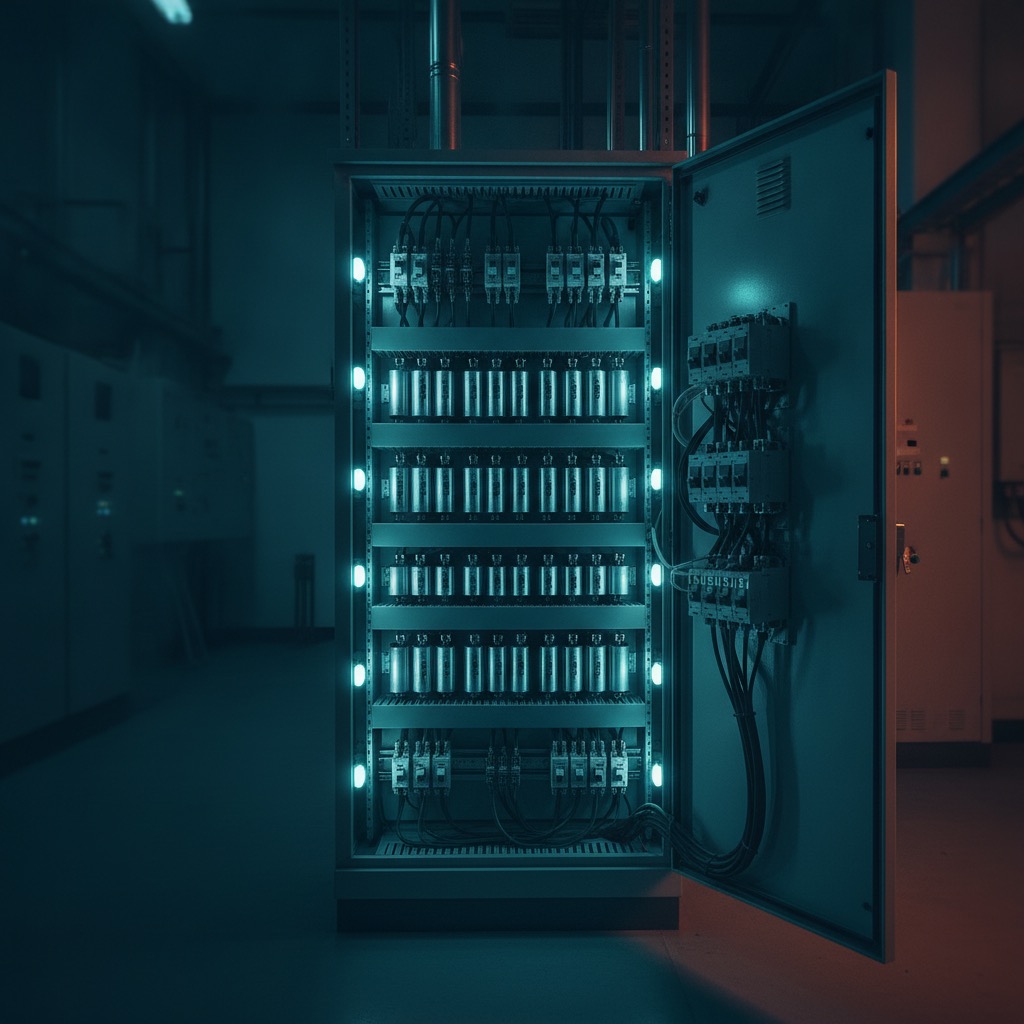
A BESS is a battery bank —today almost always lithium— that stores electrical energy to release it when it is most convenient. It matters now because its cost has collapsed: the battery pack price fell to around 70 USD/kWh in 2025, against roughly 125 USD/kWh the year before, according to BloombergNEF. That drop completely changed the return equation for industry.
That number, however, is just the cell. The complete installed system —inverter, cabinet, engineering, and construction— costs considerably more, and that is where many optimistic calculations fall apart. Before evaluating any case, it pays to separate the pack price from the installed price.
The 4 use cases of an industrial BESS
A single battery bank can tackle different problems. These are the four use cases that make economic sense today in a Mexican plant, ordered from greatest to least clarity of return.
1 · Peak shaving: trimming billed peak demand
This is the most profitable case in Mexico. Under CFE's GDMTH tariff, the peak demand charge can represent up to 40% of the bill, and it is calculated on the highest peak you register during critical hours. The BESS charges during low-demand hours and discharges during those peaks, flattening the curve. The bill drops without touching production. This connects with controlling peak demand on your bill.
2 · Time-of-use tariff arbitrage
The GDMTH charges differently by hour: base, intermediate, and peak. Arbitrage consists of charging the batteries when energy is cheap (early morning, base hours) and discharging them during the peak window —typically between 6 and 10 p.m. in summer—, avoiding buying at the expensive price. The savings per kWh are real, but smaller than those from peak shaving, because it arbitrages the energy charge, not the demand charge.
3 · Backup and operational continuity
Here the BESS replaces or complements the emergency generator: in the event of a grid interruption, it releases energy in milliseconds and keeps the critical operation running without the startup or the diesel of a generator. The value is not a recurring saving but the avoided cost of a shutdown: in processes where a micro-outage ruins a batch or stops a line, that avoided cost can justify the system on its own.
4 · Hybridization with solar PV
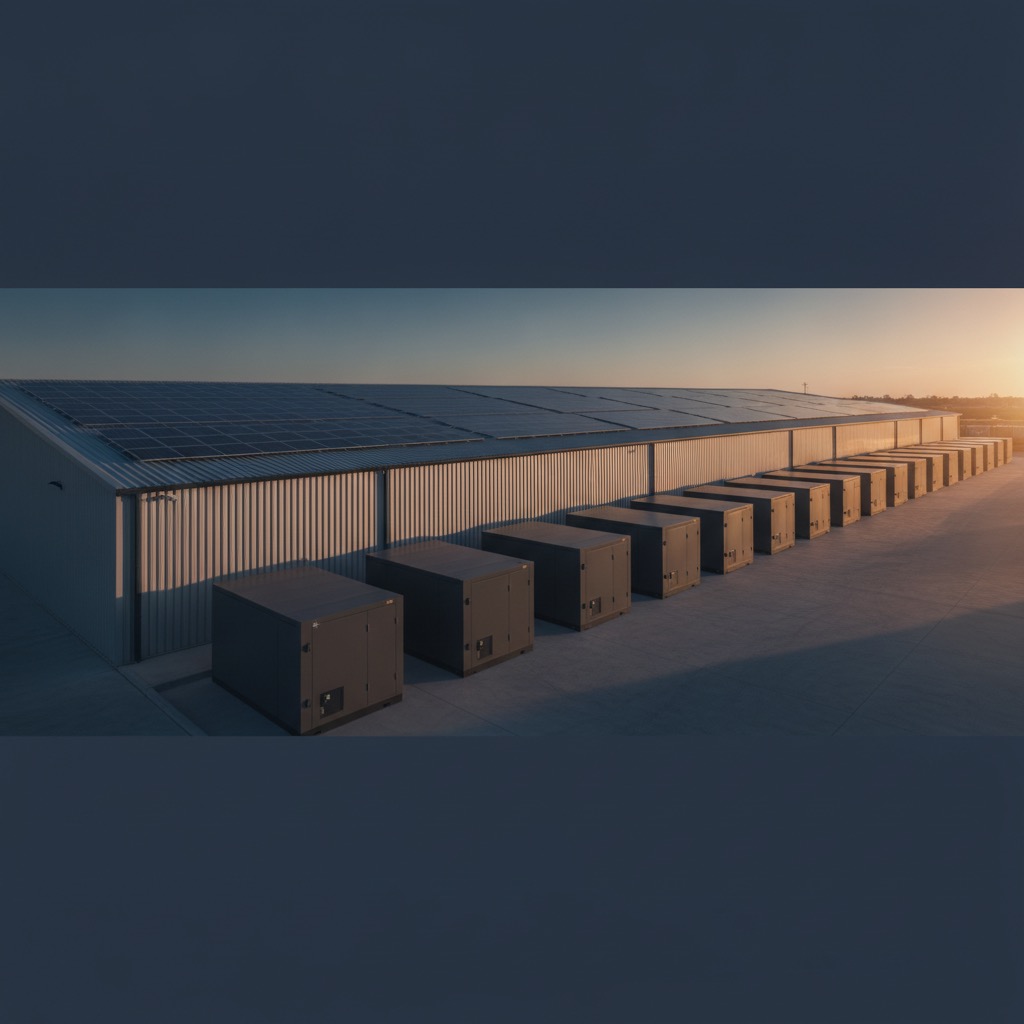
The BESS stores the solar midday surplus to use it in the late afternoon and evening, right when the sun sets and the peak window begins. It is the combination with the greatest total savings potential, but also the one with the highest investment. If you are evaluating the solar component, first read industrial solar: when it pays off, because the battery is rarely justified before the panel.
Which use case pays for the system, and with what payback?
In Mexico, peak shaving on the GDMTH tariff is usually the case that pays for the system, because it attacks the demand charge, the most expensive component of the bill. The typical payback of a well-sized commercial and industrial BESS runs from 3 to 5 years, and drops below 3 years where the demand charge is high and the peaks are frequent.
The following table summarizes the four cases. The figures are reference ranges for industry; your real number depends on your tariff, your load profile, your node, and the installed price you negotiate.
| Use case | What it saves or provides | Typical payback | Buy today or wait? |
|---|---|---|---|
| Peak shaving (peak demand) | Trims the GDMTH demand charge (up to ~40% of the bill) | ~3-5 years; under 3 with a high demand charge | Today if your demand charge is heavy and your peaks are sharp |
| Time-of-use arbitrage | Difference between base and peak energy | ~5-8 years | Evaluate; rarely justifies the system on its own |
| Backup / continuity | Avoided cost of shutdowns and lost batches | Case by case (avoided cost) | Today if a micro-outage costs you dearly |
| Solar + batteries | Uses solar surplus during the peak window | ~6-9 years | Today with solar already installed; if not, the panel first |
Reference ranges for commercial and industrial systems; these are not quotes. The real payback is modeled with your bill, your hourly load curve, and the current installed cost.
How much does an installed BESS cost in 2026?
It depends on size and region, but it pays to distinguish the pack price from the installed price. For commercial and industrial systems, the complete installed cost has been cited at around 280 to 580 USD/kWh in small equipment, dropping to roughly 180 to 300 USD/kWh in large containerized systems (from ~100 kWh up), according to industry surveys.
| Item | Cited range (USD/kWh) | Source / qualifier |
|---|---|---|
| Battery pack (cells only) | ~70 (2025) vs ~125 (2024) | BloombergNEF |
| Utility-scale 4 h installed (mid-case 2026) | ~334 | NREL, projection |
| C&I installed, small system | ~280-580 | Market surveys |
| C&I installed, large system (containerized) | ~180-300 | Market surveys |
As a rough peso reference, at ~18 MXN/USD a large 500 kWh C&I system at 250 USD/kWh runs around 2.25 million MXN in equipment CAPEX alone, before engineering and construction. It is an illustrative figure, not a quote: the number that matters is the one that comes from modeling your case.
How long do batteries last and how do they degrade?
Lithium batteries lose capacity through two paths: cycle aging (each charge and discharge) and calendar aging (the simple passage of time, worsened by temperature and by keeping the battery always full). A well-operated industrial LFP chemistry is usually specified for thousands of cycles before dropping to 80% of its capacity, with a service life on the order of 10 to 15 years.
That degradation has to be put into the financial model. Operating within a bounded charge window, controlling temperature, and limiting cycling current extends the service life measurably. A poorly operated BESS ages years ahead of time, and that is where the ROI promised in the spreadsheet evaporates.
When does it pay to buy today and when does it pay to wait?
It pays today if you have a high demand charge under GDMTH with sharp peaks (peak shaving pays off quickly), if a micro-outage costs you a batch or an expensive shutdown (backup), or if you already have solar and waste midday surplus. It pays to wait if your case depends only on time-of-use arbitrage or if your load profile is flat and without peaks: there the payback stretches out and the annual drop in the kWh price plays in your favor.
The practical rule is this: if the saving comes from the demand charge or from an avoided cost from shutdowns, the case usually withstands today's price. If the saving depends only on the price difference between hours, it normally pays to wait until the installed system keeps dropping, because that saving is thinner. This decision is not made with the pack price that appears in the news, but by modeling your real bill. It is part of the energy optimization that we evaluate plant by plant.
BESS, distributed generation, or supply? The underlying decision
Storage is one piece, not the whole strategy: it fits within the broader framework of industrial energy optimization. Before buying batteries, it pays to locate your biggest savings lever: sometimes it is the battery, sometimes generating your own energy, and sometimes renegotiating where you buy it. To frame generating versus buying, review distributed vs central generation for industry, and to understand what weighs on your bill, the industrial electricity tariff calculation. The BESS is usually the complement that squeezes out the last points of savings once the big items are in order.
At Enerlogix we evaluate storage within the Plan 360 Management, with the same criterion as any energy investment: first the use case that pays for the system, then the sizing, and always with your real bill on the table. We don't sell batteries; we model whether they suit you and when.
Request a free evaluation or learn about the energy optimization service. To go deeper into cost and deployment figures, consult the storage overview from the IEA and the cost analysis from BloombergNEF.
Frequently asked questions
It pays to separate the cell pack, cited at around 70 USD/kWh in 2025 by BloombergNEF, from the complete installed system, which includes inverter, cabinet, engineering, and construction. For commercial and industrial systems, market surveys place the installed cost between roughly 280 and 580 USD/kWh in small equipment, and between 180 and 300 USD/kWh in large containerized systems.
The typical payback of a well-sized commercial and industrial BESS runs from 3 to 5 years, and can drop below 3 years when the demand charge is high and the peaks are frequent. Under CFE's GDMTH tariff that demand charge can weigh up to 40% of the bill, so trimming it with peak shaving is usually the case that pays for the system.
A well-operated industrial LFP chemistry is usually specified for thousands of charge and discharge cycles before dropping to 80% of capacity, with a service life on the order of 10 to 15 years. Degradation comes from cycle use and from the passage of time, and it accelerates with high temperature and with keeping the battery always full, so careful operation extends the life measurably.
It pays today if the saving comes from the demand charge under GDMTH with sharp peaks, or from an avoided cost from shutdowns where a micro-outage ruins a batch. It pays to wait if your case depends only on arbitrage between hours or if your load is flat and without peaks, because there the payback stretches out and the annual drop in the installed kWh price plays in your favor.
They don't compete, they complement each other, but the order matters. The battery is rarely justified before the solar panel, because the panel generates its own saving while the battery only shifts energy in time. The usual sequence is to first order generation and supply, evaluate solar, and leave the BESS as the complement that squeezes out the last points of saving or that provides backup.