This is a composite case based on real patterns handled by Enerlogix in the Saltillo–Ramos Arizpe electronics corridor. Some operational details have been modified to preserve confidentiality, but the figures, measures, and lessons reflect real engagements with electronics manufacturing plants.
In an electronics plant with cleanrooms, energy does not go where management thinks. It does not go to the assembly lines or the lighting: it goes to the HVAC that maintains the cleanroom class around the clock. In this case, that system accounted for 58% of total electricity consumption. Optimizing it —without touching the room's ISO class— was where the savings were.
The context
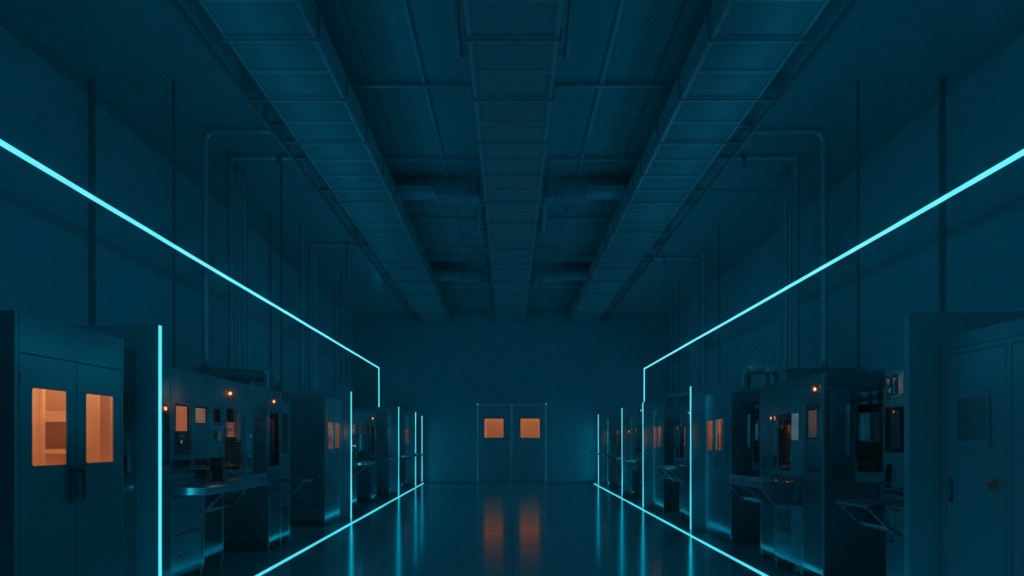
An electronics manufacturing plant in Saltillo, dedicated to the assembly of boards and modules for the automotive industry, operates with 3.6 MW of contracted demand. Three ISO class 7 and 8 cleanrooms with strict control of temperature, humidity, and particle count, operating continuously. Annual electricity spend of approximately MX$22 million.
The sector's challenge is well known: the OEM customer requires rigorous environmental conditions in the cleanroom, and any attempt to save runs into the fear of compromising the room's class and risking a quality non-conformity. That is why, in many plants, the cleanroom HVAC is off-limits to efficiency. And that is why the savings sat there untouched.
The diagnosis · energy audit
The project began with an energy audit focused on the HVAC system and power quality. The 21-day measurement revealed where energy was being wasted without anyone noticing:
| Finding | Impact |
|---|---|
| Air handlers at constant speed 24/7 | Over-ventilation during low-occupancy hours |
| Setpoints stricter than the ISO class requires | Over-cooling and excessive dehumidification |
| No heat recovery between exhaust and supply | Wasted thermal energy |
| Power factor of 0.86 | Recurring CFE penalty |
| Harmonic distortion from existing drives | Risk to sensitive equipment and losses |
The key finding: the setpoints had been set years earlier "for safety," stricter than what the ISO class actually requires. Keeping the room colder and drier than necessary cost money every day without contributing anything to quality.
The measures implemented
Each measure was first validated against the cleanroom's real requirement, not against inherited practice. None compromised the ISO class.
1 · Drives on air handlers
Variable frequency drives were installed on the air handlers to modulate flow according to occupancy and real thermal load, instead of operating at fixed speed. Fan savings grow with the cube of the speed reduction: a modest drop in flow during off-peak hours produced a disproportionate saving.
2 · Setpoint adjustment within the ISO class
Temperature and humidity were recalibrated to the range the ISO class actually allows, validated with the quality team. The room kept complying; the HVAC stopped overworking.
3 · Heat recovery
A recovery system was installed between the exhaust air and the supply air, reducing the load on the cooling and heating equipment.
4 · Power factor and harmonic correction
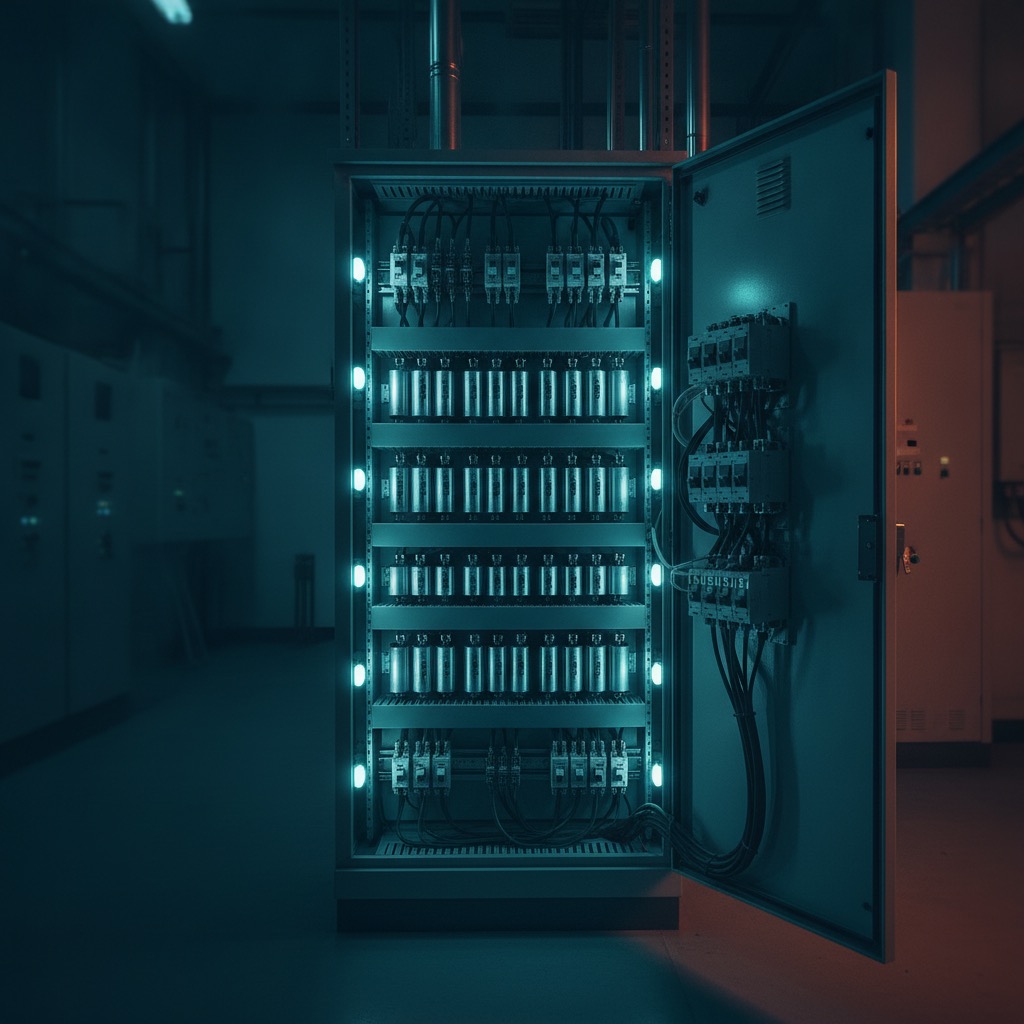
A capacitor bank with tuned filters corrected the power factor and lowered harmonic distortion, eliminating the CFE penalty and protecting sensitive equipment. The relationship between harmonics and critical equipment is covered in industrial power quality.
5 · Peak demand management
Equipment startup was rescheduled in a staggered way to flatten the peak demand spikes that were inflating the fixed charge.
Results at 12 months
| Item | Before | After |
|---|---|---|
| Annual electricity consumption | baseline | -19% |
| Annual electricity cost | ~$22,000,000 MXN | ~$17,800,000 MXN |
| Annualized savings | — | ~$4,200,000 MXN |
| Power factor | 0.86 (penalized) | 0.98 (no charge) |
| Cleanroom ISO class | Class 7 and 8 | Class 7 and 8 (unchanged) |
| Financial item | Amount (MXN) |
|---|---|
| Total investment (drives, recovery, bank with filters, fees) | ~$3,300,000 |
| Annualized savings | ~$4,200,000 |
| Project payback | less than 10 months |
The figure that reassured management: zero quality non-conformities in the 12 months that followed. The cleanroom class stayed identical while consumption dropped 19%.
Lessons from the case
1. The savings are in the HVAC, not on the line
In plants with cleanrooms, the HVAC is usually 50-70% of consumption. Looking for savings in lighting or on the assembly line is optimizing 5% and ignoring 60%. The analysis of the measures with the best ROI confirms this for this type of operation.
2. Inherited setpoints cost money every day
Fear of compromising quality leads to setting conditions stricter than necessary. Validating the setpoint against the real requirement of the ISO class, with the quality team at the table, frees up savings without risk.
3. Efficiency and quality are not at odds
The objection "don't touch the cleanroom" is resolved with measurement and validation, not faith. Each measure was tested against the real requirement before being implemented. The result: 19% less consumption, same ISO class.
4. Power quality protects the productive investment
In electronics, harmonics don't just cost energy: they degrade sensitive equipment. Correcting them is a measure of efficiency and asset protection at once.
Is your plant in a similar situation?
If your plant has cleanrooms, server rooms, or processes with critical HVAC operating 24/7, and you have never audited that system for fear of compromising the conditions, you probably have untapped savings there. The key is to optimize with measurement and validation, not blindly.
At Enerlogix we have executed Plan 360 Management with electronics, pharmaceutical, and food plants where HVAC is the dominant consumer. A similar pattern appears in the case of industrial HVAC with an under-12-month ROI at a food plant. Each case is different, but the pattern repeats.
Request a free evaluation or learn about our energy optimization service. For the full framework, read What is industrial energy optimization? and the practical optimization guide.
Frequently asked questions
Yes, as long as it is done with measurement and validation, not blindly. In this case each measure was tested against the real requirement of the ISO class with the quality team at the table, and the room kept its class 7 and 8 with no non-conformity in the 12 months that followed, while consumption dropped 19%. The common mistake is setting setpoints stricter than the class actually requires out of fear for quality.
Because in plants with cleanrooms the HVAC system that maintains temperature, humidity, and particle count around the clock usually accounts for between 50% and 70% of total electricity consumption. In this case it was 58%. Looking for savings in lighting or on the assembly line optimizes a small fraction of consumption and ignores the dominant consumer, which is the air conditioning and filtration of the cleanroom.
Five: variable frequency drives on the air handlers, setpoint adjustment within the range allowed by the ISO class, heat recovery between exhaust and supply, power factor and harmonic correction, and peak demand management. The total investment was around 3,300,000 MXN against annualized savings of close to 4,200,000 MXN, with a payback of less than 10 months.
Because non-linear loads such as drives generate harmonic distortion that not only costs energy, but degrades sensitive electronic equipment and shortens its useful life. In this case a capacitor bank with tuned filters corrected the power factor and lowered the distortion, eliminating the CFE penalty and protecting the productive investment at the same time. It is a measure of efficiency and asset protection at once.
It depends on the current state of the HVAC, the setpoints, the presence of drives, and the power factor. In this case the savings were 19% of consumption, close to 4,200,000 MXN a year, without changing the cleanroom class. The actual percentage is only determined with an energy audit that measures the system over several weeks and identifies over-ventilation, over-cooling, and power quality losses.